
Grey Seal
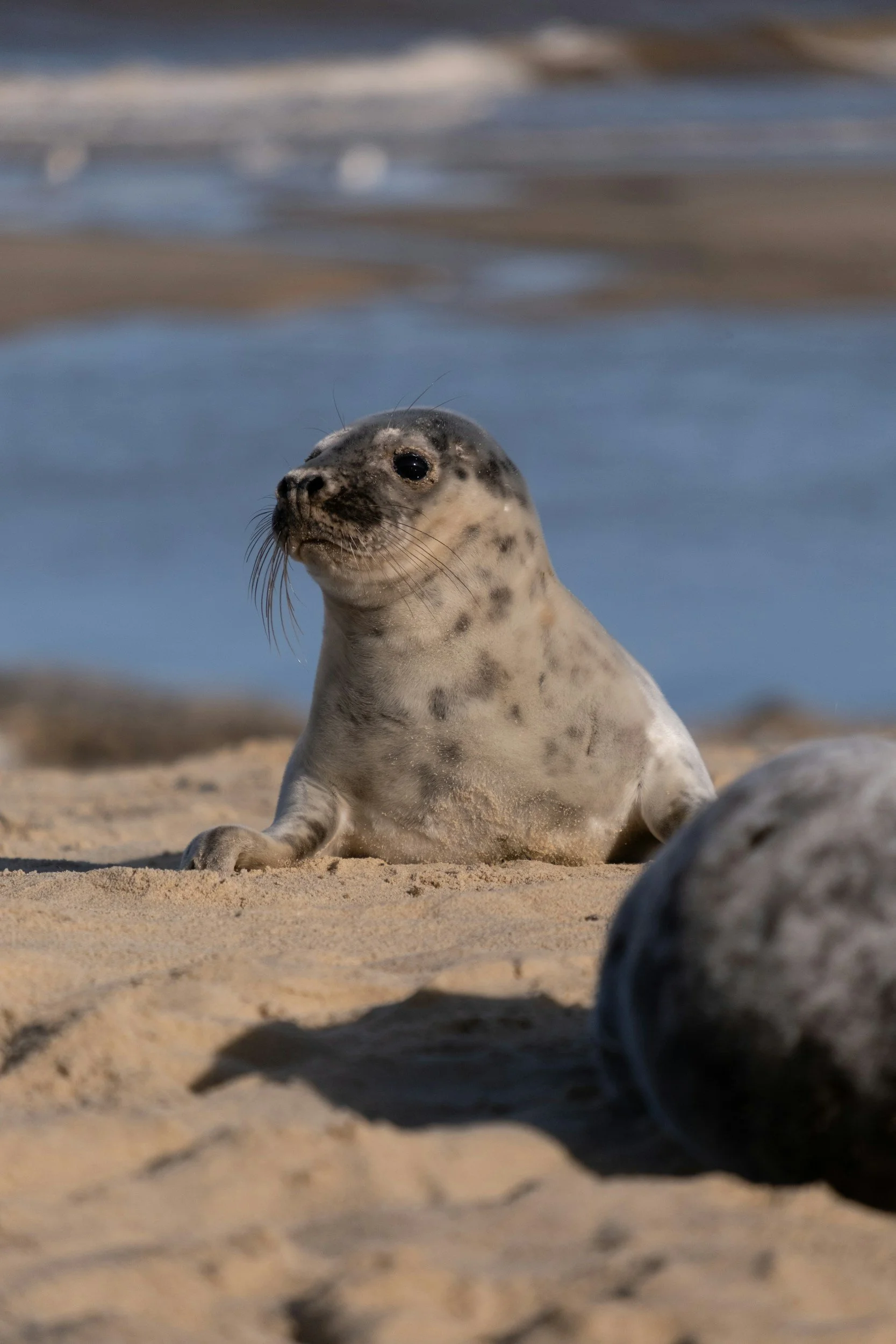
Grey Seal (Halichoerus grypus)
The grey seal (Halichoerus grypus) is Britain's largest native carnivore — a vast, whiskered, dark-eyed presence hauled out on storm-battered rocks and remote Atlantic beaches, as much a part of these islands as the sea itself. The UK is home to roughly 40% of the world's entire grey seal population, making our coastlines one of the most important seal habitats on the planet — a responsibility that carries enormous weight. In the marine ecosystem, grey seals play a vital role as apex predators, regulating fish and invertebrate populations and helping to maintain the balance of the food web from the surface down to the seafloor. Their nutrient-rich waste fertilises coastal waters, supporting the blooms of phytoplankton and zooplankton that form the base of the entire marine food chain. Seals also serve as sentinel species — their health, body condition, and reproductive success reflecting the broader state of the seas around them, from fish stock abundance to pollution levels and the impacts of climate change. Once hunted to the edge of local extinction around the British coast, grey seal populations have partially recovered — a conservation success story that carries with it a clear lesson about what protection, given time, can achieve. But the seas are changing, and the seals are watching. Five iconic species. One island. All worth fighting for.