
European Beaver
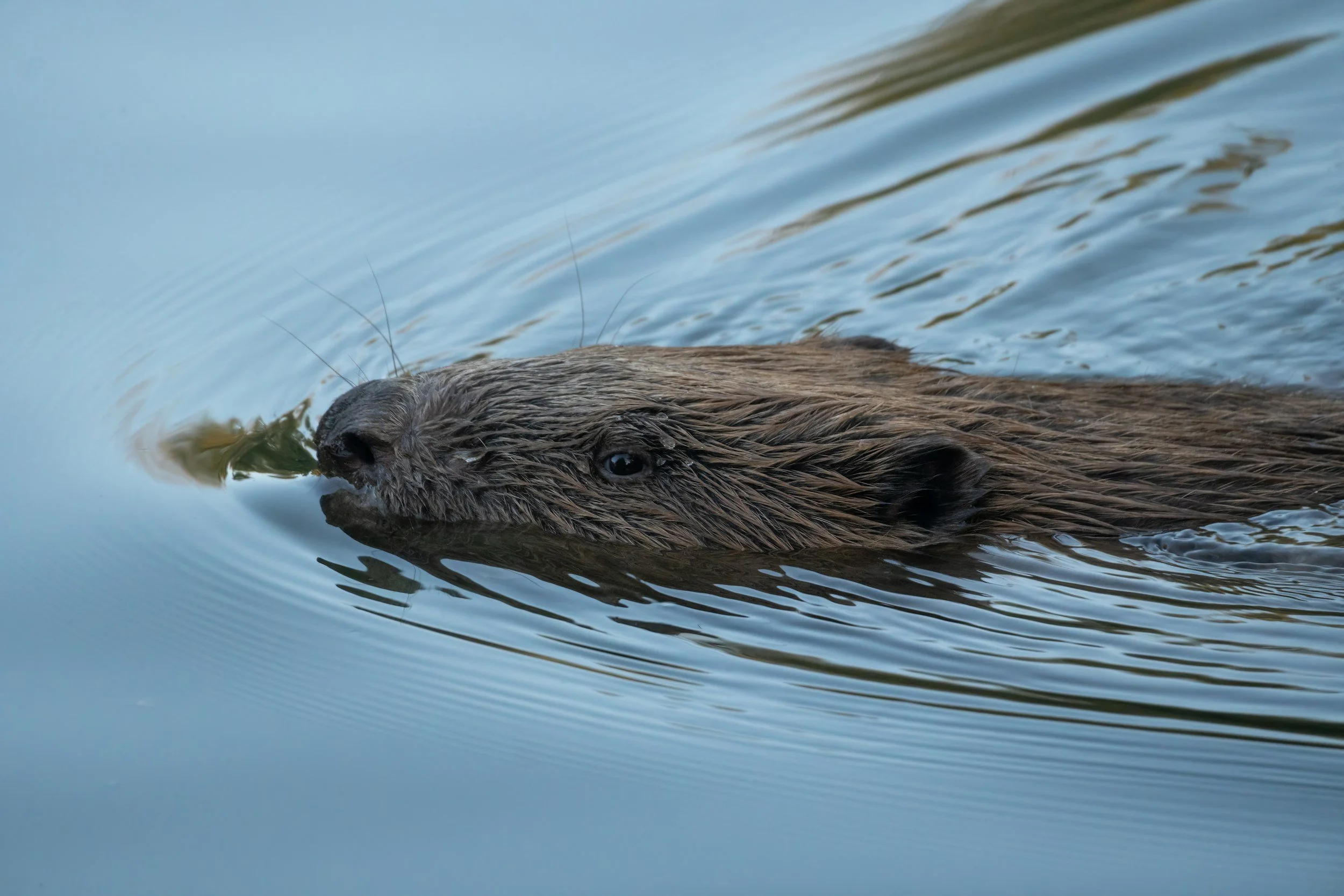
European Beaver (Castor fiber)
The European beaver (Castor fiber) is the closest thing Britain has to a landscape architect — a creature whose instinct to build transforms degraded, impoverished waterways into some of the most biodiverse habitats these islands can produce. By felling trees, constructing dams, and engineering a complex network of pools, channels, and wetlands, beavers slow the flow of water through river systems in ways that benefit everything downstream. Their dams raise water tables, re-wet surrounding land, and create the shallow, still, structurally diverse wetland environments that dragonflies, water voles, otters, amphibians, wading birds, and countless invertebrates depend upon. In doing so, they perform a form of natural flood management that no human engineering project has yet matched for cost, scale, or ecological richness. Beaver-modified rivers filter sediment and agricultural run-off, improving water quality for fish — including Atlantic salmon — and reducing the burden on human water treatment systems. Where beavers are absent, rivers run fast, straight, and ecologically thin. Where they return, the land rewilds itself. Once extinct across the entire UK, hunted out over four centuries ago for fur and castoreum, the beaver is now making a tentative but transformative comeback through reintroduction programmes in Scotland, England, and Wales. Each family of beavers that takes hold in a British river is not just a conservation victory — it is a river beginning to heal. Five iconic species. One island. All worth fighting for.