
Eurasian Curlew
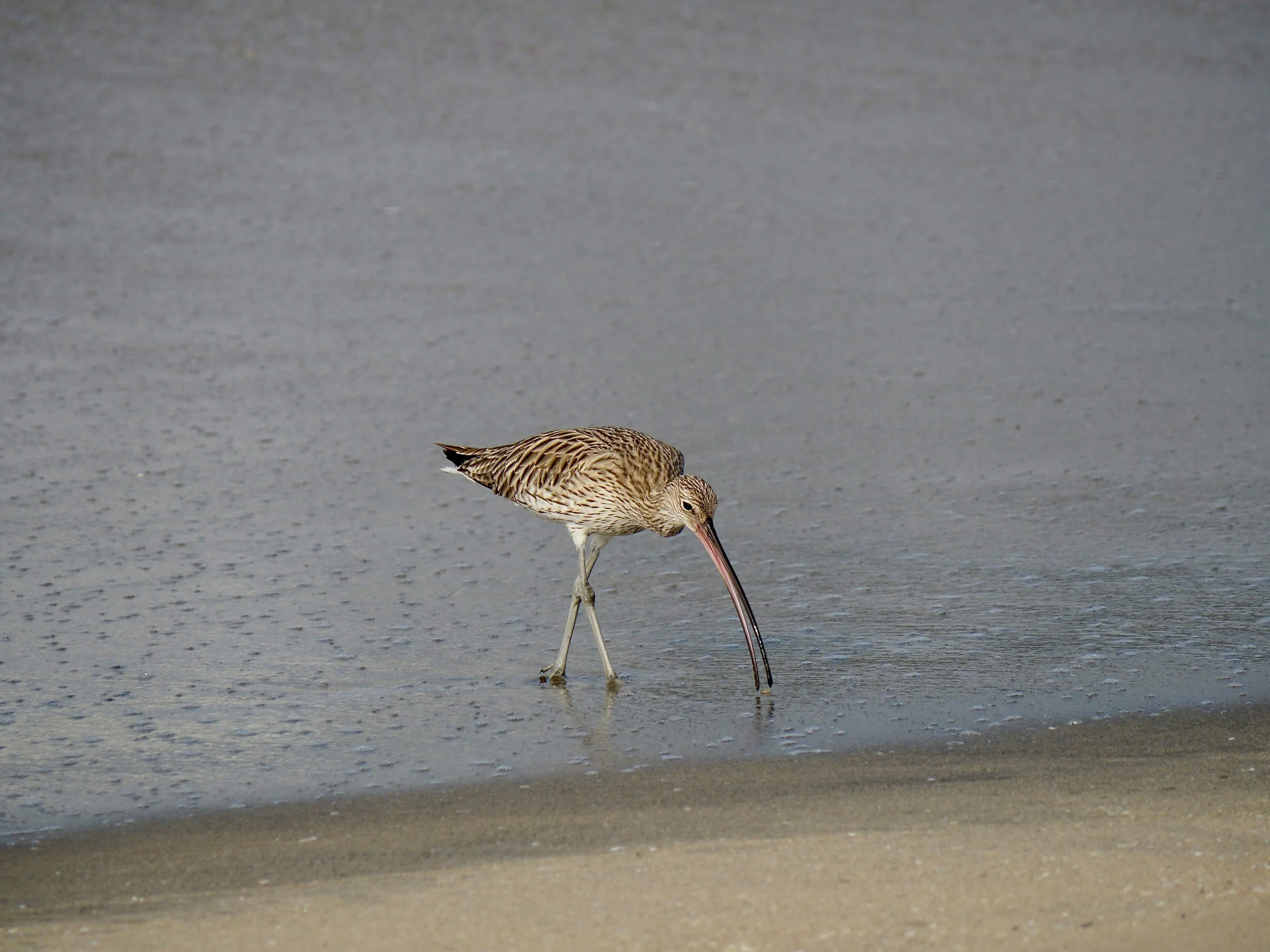
Eurasian curlew (Numenius arquata)
The Eurasian curlew (Numenius arquata) is far more than a beautiful bird — it is an indicator species, a living measure of the health of some of Britain's most precious and threatened habitats. Breeding across upland moorland, wet grassland, and coastal marsh, and wintering in vast numbers on our estuaries and mudflats, the curlew moves through the full breadth of the British landscape across a single year, connecting ecosystems that might otherwise seem worlds apart. Its long, decurved bill is a precision instrument, probing deep into soft soils and tidal sediments for earthworms, beetles, cranefly larvae, and molluscs — feeding in ways that no other British bird quite replicates, and helping to regulate invertebrate populations across a range of habitats. Where curlews thrive, it is a sign that the land beneath them is functioning — that soils are rich, grasslands are unimproved, and wetlands are intact. Where they disappear, it is a warning. The UK holds approximately 25% of the global breeding population of curlew, making our uplands and wet grasslands internationally significant. Yet numbers have fallen by more than 50% since the 1970s, driven by agricultural intensification, habitat loss, and predation pressure on ground nests. To restore the curlew is to restore the landscapes it depends upon — and in doing so, to return health, biodiversity, and resilience to some of the most ecologically important corners of these islands. Five iconic species. One island. All worth fighting for.