
European Honey Bee
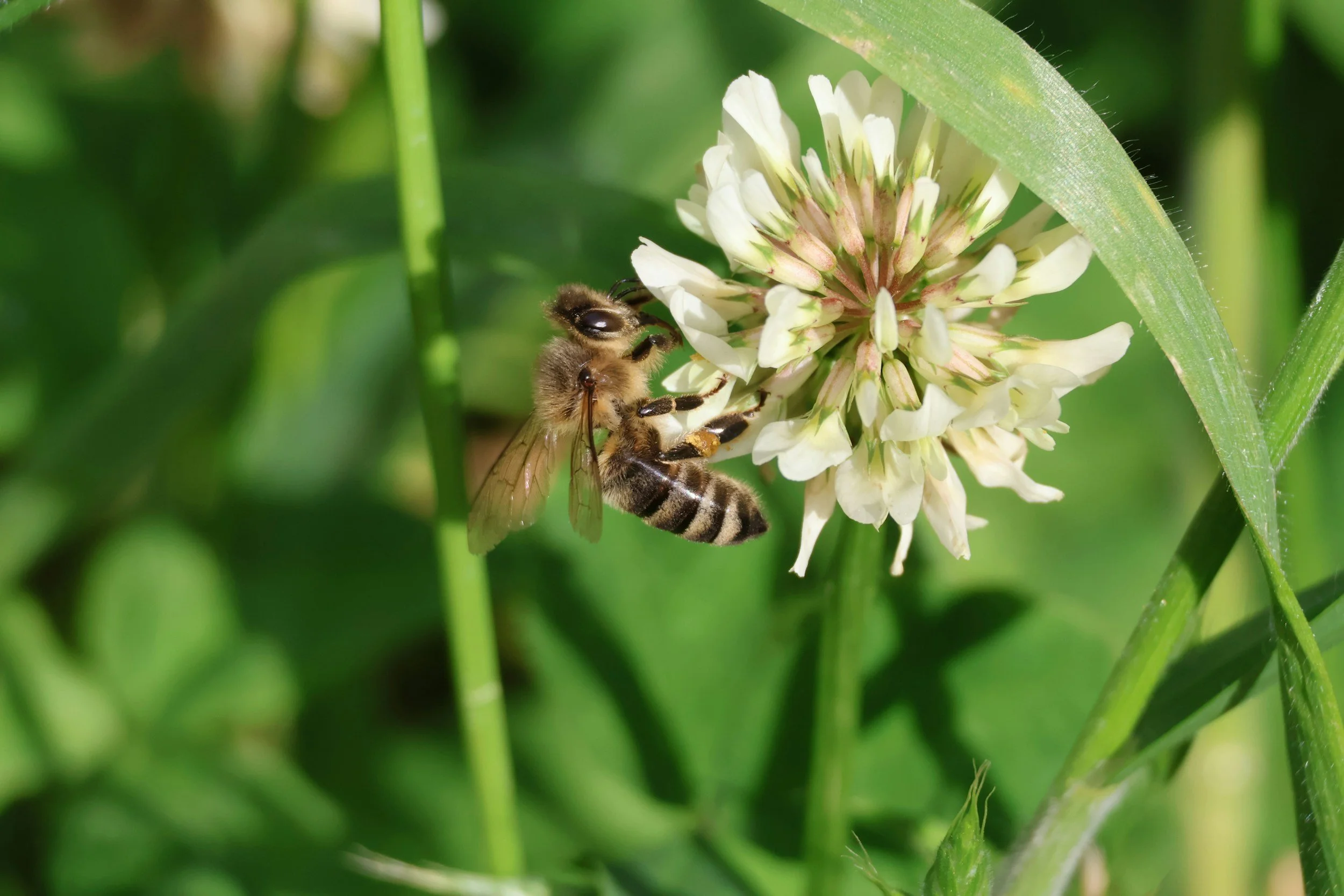
European honey bee (Apis mellifera)
The European honey bee (Apis mellifera) is perhaps the most consequential wild creature on these islands — a small, amber-winged insect upon whose tireless labour the entire architecture of the British countryside depends. Honey bees are keystone pollinators, moving from flower to flower in their thousands, transferring pollen and enabling the reproduction of a vast web of flowering plants that in turn sustain birds, mammals, insects, and the soils themselves. It is estimated that a third of the food we eat exists because of pollination, and the honey bee sits at the very heart of that process. But their role extends far beyond agriculture. In hedgerows, meadows, woodlands, and heathlands, honey bees support the wildflower communities that underpin entire ecosystems — from the orchids of chalk grassland to the heather of upland moor. A healthy honey bee population is a sign of a landscape rich in forage, low in chemical pressure, and diverse enough in structure to support the full annual cycle of colony life. Yet across Britain, honey bees and their wild relatives face mounting pressure from habitat loss, pesticide exposure, disease, and the steady disappearance of the flower-rich landscapes they depend upon. To protect the honey bee is not simply to save an insect — it is to defend the living network that holds the British countryside together. Five iconic species. One island. All worth fighting for.